


Battery-powered blowers can cost more to purchase, but it’s the total cost of operations over time that tells the real story.
In 2023 the University of Pennsylvania reported that fuel and maintenance savings — of about $1,100 per battery unit per year — offset initial purchase costs within two years. After the break-even point, contractors earn higher profits than from gas.
This graph shows the results of a 2022 study by the Santa Cruz Coalition for a Healthy and Safe Environment, which observed a positive return on investment (ROI) within one year.
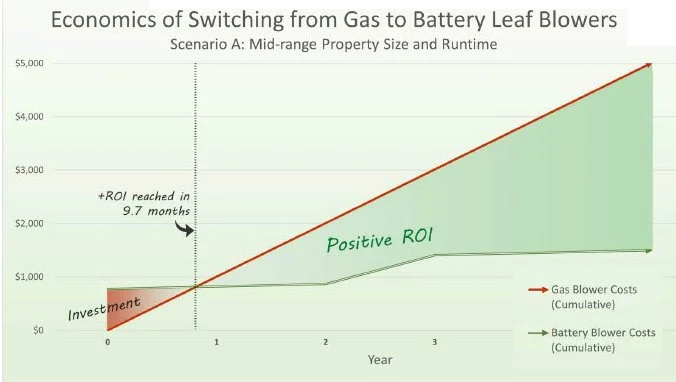
Total cost has decreased since these studies. Technology has improved and purchase prices have gone down. And with gas prices rising, the battery advantage is even greater.

What are the real economics of moving from gas to battery?
When we look objectively at the numbers, the economic picture is clear: It’s lower overall costs for landscapers and homeowners with battery power. MORE
What about landscapers’ fears for their businesses?
Ultimately the switch to battery leaf blowers strengthens—not weakens—our local landscaping industry and everyone that lives and works in our township can be safer and healthier. MORE
Will the transition to gas leaf blowers result in higher prices for lawn services?
Data obtained from a wide range of pricing sources show no pattern of significantly higher prices for lawn services in communities that have banned gas-powered leaf blowers. MORE
How can we ease the transition from gas?
Let’s help our small businesses make the transition to create a more resilient local business community and simultaneously build a cleaner, quieter, healthier township MORE